






how to make bowling alley | Flying Bowling Guide
How to Make a Bowling Alley: Essential Steps for Equipment Professionals
Understanding how to make a bowling alley is crucial for professionals seeking to design, install, or upgrade lanes. This article features comprehensive, fact-driven insights to streamline your project planning, reduce cost overruns, and ensure optimal player experience. Discover best practices, equipment standards, and industry data.
Essential Guide: How to Make a Bowling Alley
Planning and Design
- Location & Space Analysis
- Assess minimum space needs: 100 ft length x 14 ft width per lane (USBC)
- Consider ceiling height: at least 12 ft recommended
- Plan for player circulation, seating, and ADA accessibility
- Project Feasibility
- Review zoning and compliance standards (e.g., local building codes, USBC, IBF)
- Evaluate market demographics and competitive analysis
- Establish realistic budget projections (US Bowling estimates average $100,000+ per lane)
Structural Components
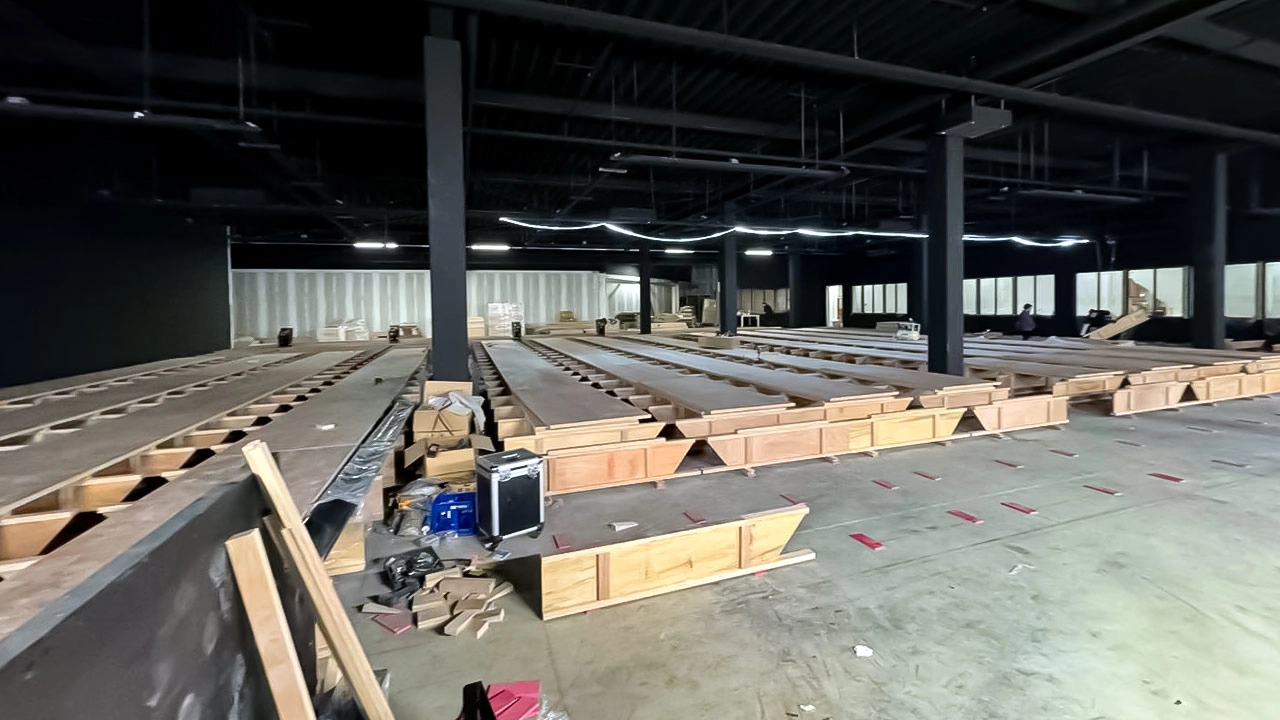
- Subfloor Construction
- Use leveled, moisture-controlled concrete slabs
- Apply damp-proof membranes to prevent warping and mold
- Lane Installation
- Hardwood (maple and pine) or synthetic lane materials (approved by USBC)
- Lane length: 60 ft from foul line to head pin, 42 in width
- Integrate durable approach areas and foul lines
- Pinsetter Systems
- Automated pinsetters (examples: Brunswick GS-X, QubicaAMF EDGE)
- Evaluate for energy efficiency, reliability, and service availability
- Comply with maintenance safety regulations according to manufacturer guidelines
Equipment Selection
- Ball Return Systems
- Install high-durability, low-noise ball returns
- Ensure seamless transitions and integrate ball racks at player area
- Scoring & Control Systems
- Prefer automated scoring (e.g., QubicaAMF BES X)
- Opt for cloud-integrated or networked systems for easy management
- Sports Flooring & Seating
- Encourage shock-absorbing flooring behind lanes
- Use modular, ergonomic seating for spectators and bowlers
Lighting & Audio-Visual
- Appropriate Lane Lighting
- Uniform, glare-free, LED installations (minimum 50 lux at approach, 100 lux at pins per CIE standards)
- Accent lighting for cosmic or themed events
- Audio-Visual Enhancements
- Soundproofing for player comfort
- Centralized AV control for music and announcements
Compliance & Quality Assurance
- Standards Adherence
- USBC, IBF, and local codes for lane specs and safety
- Regular equipment inspections for ongoing compliance
- Service & Maintenance Protocols
- Establish interval-based schedules for lane cleaning, pinsetter service, HVAC checks
- Train staff for fast troubleshooting and repairs
Sources and Industry References
- (https://www.bowl.com/)
- (https://bowling.sport/)
- US Bowling Corporation Installation Guides
- Brunswick & QubicaAMF Equipment Manuals
Key Takeaways for Equipment Professionals
- Careful planning, regulatory compliance, and selecting certified equipment are key to successful bowling alley constructions.
- Ongoing staff training and scheduled maintenance mitigate downtime and protect your investment.
What are the different types of Bowling Alley?
Top 10 bowling alley equipment Manufacturers and Supplier Brands
Bowling Alley Installations: Expert Guide & FAQs | Flying Bowling
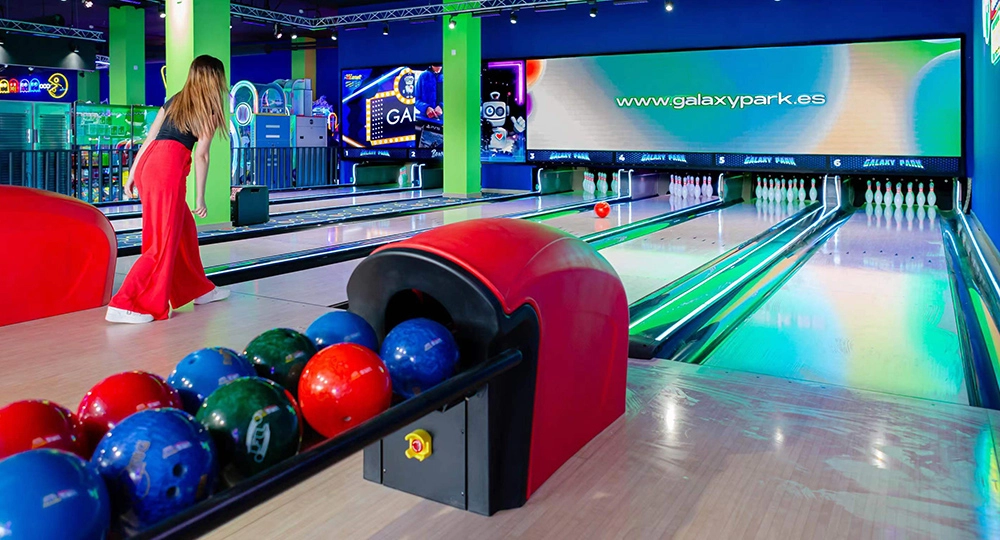
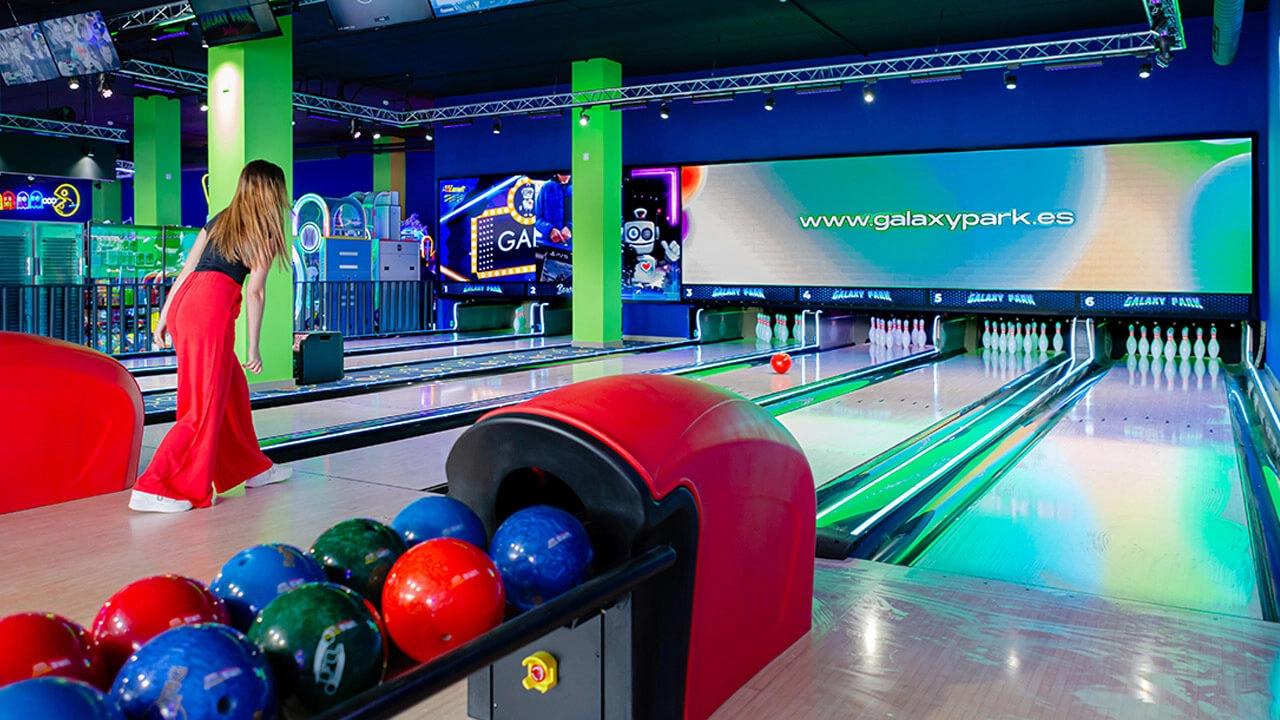
Flying Bowling's new business card - Galaxy Park Bowling, digital empowerment, reshaping competition and leisure
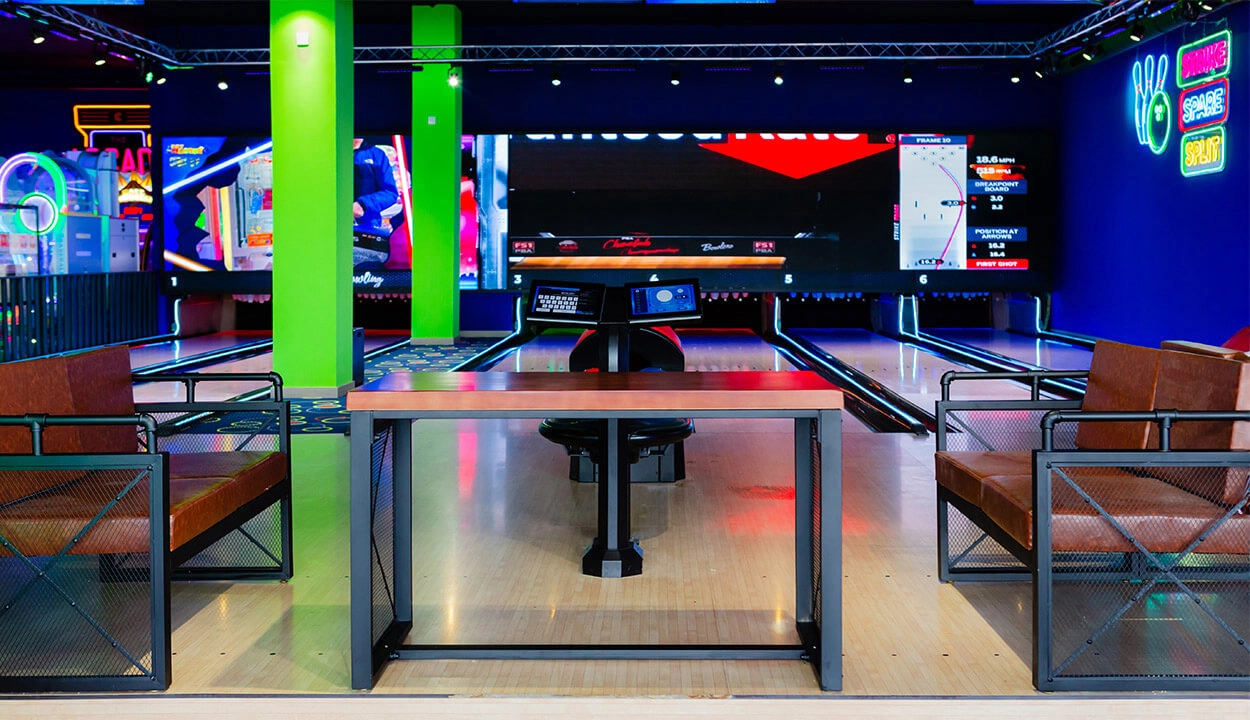
How to start a bowling alley business (2025 Guide)
Customer care
My room isn't quite long enough. Can you install slightly shorter lanes that are non-regulation length?
Of course, we can customize bowling lanes according to your venue.
My room is only about 50 or 60 feet long. How short is too short" for bowling lanes?
That depends on what each person likes. It's like asking how low we can put a basketball goal so that it's still fun. If your bowlers are mostly kids or people who haven't bowled much, they might not mind extremely short lanes. But serious league and tournament bowlers won't like a lane that isn't the normal size.
Service
How long do you provide warranty service?
The whole machine is under warranty for 2 years, and the core components (motor/mainboard) are extended to 3 years, and the maintenance is at cost price for life.
Technology
What is the degree of automation of the equipment? Does it support automatic scoring, automatic ball return and other functions?
Fully automated. Our equipment is equipped with an independent intelligent scoring system, and also has automatic ball return and ball up functions to ensure that the game can proceed smoothly, which greatly improves the user experience and reduces labor costs and maintenance difficulties.
Are your products compliant with European safety standards?
Yes, all of our products meet the required EU safety and regulatory standards.
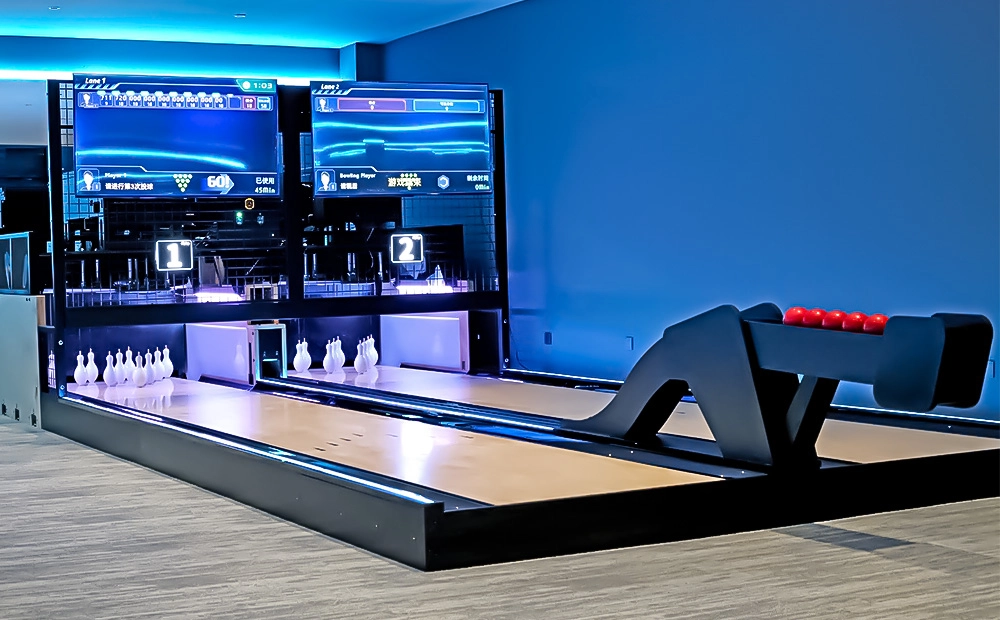
Flying Smart Duckpin Bowling
The innovative design of Flying Smart Duckpin Bowling (FSDB) makes it perfect for places like bars, billiard halls and game centers. It makes people want to come back more often and spend more money. FSDB is fun and competitive, so it will become a new focus for social activities.
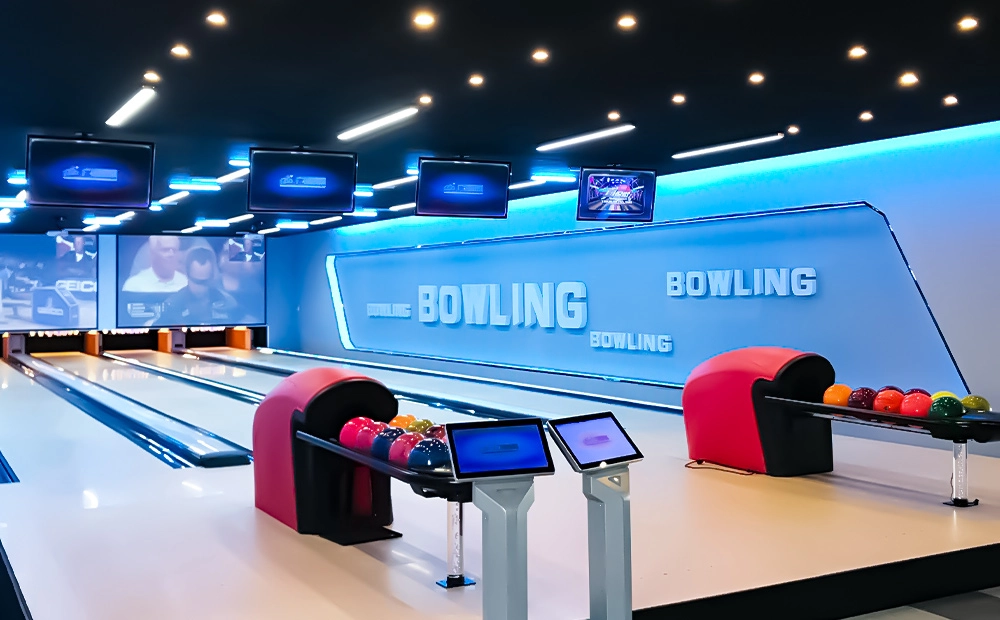
Flying Classic Standard Bowling
Flying Classic Standard Bowling (FCSB) employs the World Standard Competition Scoring System to deliver a more professional bowling experience, enabling bowlers to enjoy a professional-standard match at their convenience.
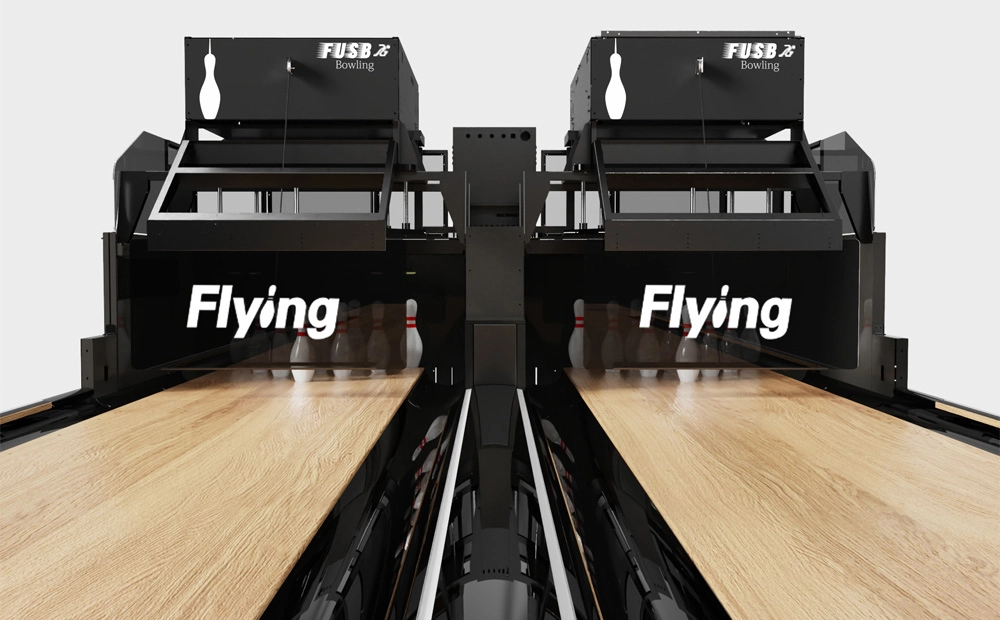
Flying Ultra Standard Bowling
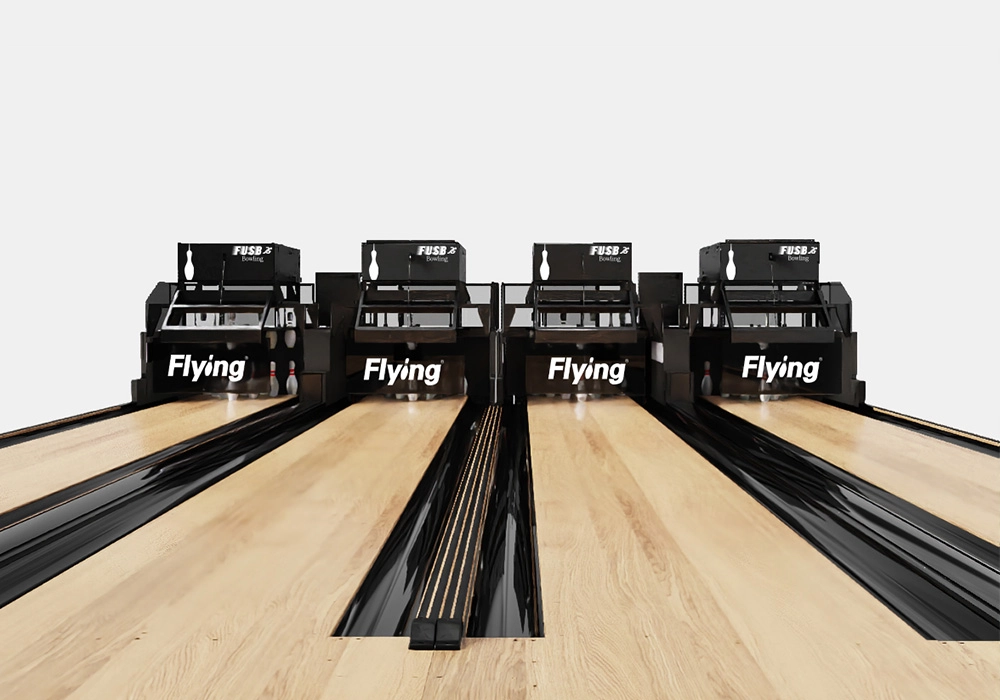
Flying Ultra Standard Bowling (FUSB) Upgraded Version
The string pinsetter uses the latest technology. It offers a more enjoyable bowling experience thanks to its innovative designs and modern technology.

Get in touch
Contact us
If you contact us now for more details, we can provide you with a custom bowling alley service.
Our service team will get back to you within 24 hours, normally!



Facebook
YouTube
Linkedin
Twitter