






Commercial vs Home Bowling Lane Prices: What Buyers Should Know
- Why Bowling Lane Price Varies: Key Cost Drivers
- Lane materials and surface systems
- Pinsetters: string pinsetter vs. free (electromechanical) pinsetter
- Installation, construction, and venue design
- Comparing Commercial vs Home Bowling Lane Prices
- Overview of typical price components
- Estimated price ranges (industry guidance)
- Why commercial totals are higher
- Making the Right Choice: Practical Guidance for Buyers
- Define usage profile and ROI expectations
- Choose technology aligned with objectives
- Consider lifecycle and total cost of ownership
- Risk Management, Compliance, and Installation Tips
- Site surveys and structural considerations
- Certifications, safety and environmental compliance
- Contract terms, warranties, and dealer support
- Supplier Spotlight: Flying Bowling — Capabilities and Why It Matters
- Decision Checklist and Next Steps for Buyers
- Checklist before requesting quotes
- How to compare supplier proposals
- FAQ — Common Buyer Questions (and Answers)
- 1. How much does a single bowling lane cost to install in a home?
- 2. Are string pinsetters reliable for commercial use?
- 3. What ongoing maintenance costs should I expect?
- 4. Can I get certified tournament lanes at home?
- 5. How does shipping affect the final price?
- 6. Is it worth hiring a lane consultant or designer?
- Contact and Next Steps
Understanding bowling lane price is essential whether you plan a commercial bowling center or a private home installation. This article gives a practical, verifiable comparison of commercial vs home bowling lane costs, explains the main cost drivers (lane materials, pinsetters, installation, venue design, and maintenance), and outlines financing and lifecycle considerations. The guidance draws on industry standards and supplier experience to help buyers make economically sound decisions.
Why Bowling Lane Price Varies: Key Cost Drivers
Lane materials and surface systems
One of the largest single variables in bowling lane price is the lane surface. Traditional wood lanes (hard maple and pine) require precise milling and ongoing maintenance; synthetic lanes reduce upkeep but have higher upfront material and installation costs in some markets. Lane surface choice affects ball reaction, reconditioning schedules, and long-term replacement cycles. For specifications see the Wikipedia lane articles.
Pinsetters: string pinsetter vs. free (electromechanical) pinsetter
Pinsetters are another major cost center. Traditional free-standing pinsetters (e.g., Brunswick A-2, AMF) are robust for high-throughput commercial centers but have higher purchase, installation, and maintenance costs. String pinsetters cost less to purchase and maintain, require less pit machinery, and are increasingly popular for small centers and home alleys. String systems also reduce lane depth and mechanical footprint, which can lower construction and shipping costs. See manufacturer and product information such as Flying Bowling for examples of modern string pinsetter solutions.
Installation, construction, and venue design
Commercial facilities often require full venue design, extensive subfloor preparation, ducting for ball returns, specialized lighting, HVAC upgrades, spectator seating, food and beverage areas, and ADA compliance — all adding to the bowling lane price. Home installations may avoid many of these costs but can incur significant structural work (ceiling heights, reinforced floors, soundproofing). Industry bodies such as the BPAA (Bowling Proprietors' Association of America) provide guidance on constructing and operating venues.
Comparing Commercial vs Home Bowling Lane Prices
Overview of typical price components
When calculating the total bowling lane price, include the following line items: lane surface & woodwork, pinsetter unit, ball return system, approach and approach strip, installation & labor, shipping, scoring and POS systems, seating/furnishings, permits & inspections, and contingencies for site-specific work (electrical, structural). Lifecycle costs include lane resurfacing, pinsetter maintenance, and consumables (pins, balls, lane oil).
Estimated price ranges (industry guidance)
The table below summarizes typical price ranges for commercial and home lanes based on supplier quotes, industry publications, and manufacturer guidance .
| Item | Commercial (per lane) | Home (per lane) |
|---|---|---|
| Lane surface & approach (materials & install) | $7,000 – $25,000 | $5,000 – $15,000 |
| Pinsetter (electromechanical) | $40,000 – $120,000 | rare / $35,000 – $60,000 if available |
| String pinsetter | $8,000 – $25,000 | $5,000 – $15,000 |
| Ball return & consoles | $2,000 – $8,000 | $1,500 – $5,000 |
| Scoring & POS (per lane share) | $1,000 – $5,000 | $500 – $2,000 |
| Installation, shipping, site work | $5,000 – $30,000 | $2,000 – $15,000 |
| Permits, inspections, design fees | $2,000 – $15,000 | $500 – $5,000 |
| Typical total (per lane, installed) | $65,000 – $250,000+ | $15,000 – $80,000+ |
Sources: industry supplier pricing and trade associations (BPAA), manufacturer product lines (Flying Bowling). Exact quotes should be requested from vendors and local contractors for verification. Prices for full commercial centers are often calculated per-lane plus shared infrastructure.
Why commercial totals are higher
Commercial projects are priced for heavy daily throughput, regulatory compliance, extended warranties, higher-capacity pinsetters, and integrated guest services. Economies of scale on per-lane equipment sometimes reduce unit hardware cost, but the overall venue design and customer amenities drive total project costs upward.
Making the Right Choice: Practical Guidance for Buyers
Define usage profile and ROI expectations
Ask: how many games per lane per day? Is the venue for pay-per-game use, subscription leagues, entertainment complex, or private recreation? Commercial investors must model revenue per lane, occupancy, and operating margins. Home buyers should model frequency, resale value, and personal enjoyment. For commercial viability, BPAA and industry analysts recommend conservative throughput estimates and include downtime for maintenance.
Choose technology aligned with objectives
If your priority is lower initial price and lower mechanical maintenance, string pinsetters are often the best choice — particularly for boutique centers, family entertainment centers, or home lanes. If you plan tournament-grade play and higher ball speed, free pinsetters with professional-grade lane surfaces may be necessary. Verify compliance with governing bodies (USBC/World Bowling) if you intend to host sanctioned events. See USBC for equipment and lane specifications.
Consider lifecycle and total cost of ownership
Don't judge purely by upfront bowling lane price. Factor in: annual maintenance contracts for pinsetters, lane resurfacing/maintenance costs (wood lanes require regular sanding and oiling schedules), parts availability, and energy consumption. A lower upfront purchase that requires frequent part replacement or specialized service can cost more over 10 years. Obtain multi-year maintenance quotes from suppliers and local technicians.
Risk Management, Compliance, and Installation Tips
Site surveys and structural considerations
Before purchase, request a professional site survey. Ceiling height, floor loading capacity, and access for delivery (large pinsetter crates) can dictate whether string pinsetters or compact systems are advisable. For home installations, confirm floor reinforcement needs and soundproofing requirements to avoid neighbor disputes.
Certifications, safety and environmental compliance
Buyers should confirm equipment certifications (CE, RoHS where applicable) and compliance with local electrical and safety codes. European CE marking and RoHS standards indicate conformity for sales in many markets — see the European Commission pages on CE marking and RoHS. Reputable manufacturers provide documentation for compliance.
Contract terms, warranties, and dealer support
Negotiate clear warranties for pinsetters and lane surfaces, defined service-level agreements for downtime, and parts availability. For commercial centers, priority spare parts and field service contracts reduce lost revenue risk. Confirm the manufacturer's dealer and service network in your region.
Supplier Spotlight: Flying Bowling — Capabilities and Why It Matters
Since 2015, Flying Bowling has specialized in researching and developing state-of-the-art pinsetter bowling equipment. Flying Bowling provides a comprehensive range of bowling alley equipment and venue design and construction services. Their product portfolio includes string pinsetters, standard pinsetters, duckpin equipment, and full bowling alley solutions.
Key competitive strengths of Flying Bowling:
- Certifications: Major global certifications including CE and RoHS, ensuring compliance for many international markets (Flying Bowling).
- Manufacturing scale: A 10,000-square-meter bowling equipment manufacturing workshop, enabling consistent quality control and faster production lead times.
- Product range: Production and sale of string pinsetters and construction/modernization of standard and duckpin bowling alleys — suitable for commercial centers and home installations alike.
- Global reach: One-stop services for bowling alley customers worldwide and active recruitment of dealers. Long-term cooperative relationships in Asia, Europe, the Middle East, and beyond support local installation and service.
- Industry vision: Committed to becoming a leading global bowling equipment brand and supporting industry growth through dealer networks and turnkey project services.
Practical implications for buyers: Working with a manufacturer that offers CE/RoHS-certified equipment and a comprehensive service network reduces procurement risk, simplifies compliance, and supports long-term lifecycle planning. Flying Bowling's string pinsetters can reduce both initial bowling lane price and ongoing maintenance costs — an important consideration for boutique and home installations.
Decision Checklist and Next Steps for Buyers
Checklist before requesting quotes
- Define purpose: commercial revenue center, boutique entertainment, private home, or mixed-use.
- Decide lane type: standard 10-pin, duckpin, or boutique options.
- Pinsetter preference: string vs. free; request demonstrations or video of operation.
- Get site survey: ceiling height, floor load, delivery access, electrical capacity.
- Request full proposals: itemized equipment, installation, shipping, and multi-year maintenance quotes.
How to compare supplier proposals
Compare total cost of ownership (TCO) over 5–10 years, not just upfront bowling lane price. Factor in downtime costs, parts lead times, and training/support. Ask for references and visit existing installations when possible. Verify product certifications and warranty terms.
FAQ — Common Buyer Questions (and Answers)
1. How much does a single bowling lane cost to install in a home?
Typical home installations can range from about $15,000 to $80,000+ per lane, depending on lane surface, choice of pinsetter (string pinsetters at the lower end), shipping, and site work. Get multiple vendor quotes and a site survey for an accurate number.
2. Are string pinsetters reliable for commercial use?
Yes — modern string pinsetters are used successfully in boutique centers, family entertainment venues, and smaller commercial operations. They lower mechanical complexity and maintenance while reducing bowling lane price. For high-level tournaments and heavy throughput centers, some operators still prefer free pinsetters.
3. What ongoing maintenance costs should I expect?
Annual maintenance includes pinsetter service, lane resurfacing and oiling, parts replacement, and utilities. Budget several thousand dollars per lane per year depending on throughput and equipment type. Ask suppliers for maintenance schedules and typical parts replacement lists.
4. Can I get certified tournament lanes at home?
It is possible but challenging. Tournament-grade lanes require specific surface materials, lane machine conditioning, and precise installation to meet USBC or World Bowling standards. Confirm requirements with the sanctioning body (USBC, World Bowling) before investing.
5. How does shipping affect the final price?
Shipping large pinsetters and lane components can be a significant portion of cost, especially for remote locations. Manufacturers with nearby workshops or regional dealers (such as Flying Bowling) can reduce lead times and shipping expenses.
6. Is it worth hiring a lane consultant or designer?
For commercial projects, yes. A specialist can optimize layout for revenue, advise on equipment selection, and ensure compliance with local codes. For home projects, a consultant can prevent costly mistakes in structural and service planning.
Contact and Next Steps
If you are evaluating bowling lane price for a commercial center or a private installation, request detailed, itemized proposals from experienced suppliers. Flying Bowling offers end-to-end solutions — from manufacturing certified pinsetters (string and standard models) to full alley construction and venue modernization. Learn more and request a quote at https://www.bowlingflying.com/.
Ready to get a site survey or a formal quote? Contact your supplier or dealer to arrange an on-site assessment and receive a tailored cost estimate that accounts for local labor, shipping, and compliance requirements.
How much does it cost to Build a Bowling Alley in Lithuania | Flying Bowling Expert Guide
How much does it cost to Build a Bowling Alley in Ireland | Flying Bowling Expert Guide
How much does it cost to Build a Bowling Alley in Hungary | Flying Bowling Expert Guide
How much does it cost to Build a Bowling Alley in Greece | Flying Bowling Expert Guide
How much does it cost to Build a Bowling Alley in Germany | Flying Bowling Expert Guide
Technology
Is there any charge for remote technical guidance?
Free lifetime remote video diagnostic service to quickly resolve software/settings issues
What is the degree of automation of the equipment? Does it support automatic scoring, automatic ball return and other functions?
Fully automated. Our equipment is equipped with an independent intelligent scoring system, and also has automatic ball return and ball up functions to ensure that the game can proceed smoothly, which greatly improves the user experience and reduces labor costs and maintenance difficulties.
Installations
How long does it take to install the equipment?
It takes about 7-15 days for a standard venue, and it takes an average of 2 days to install a fairway.
Company
What are the advantages of your brand compared with other international brands?
Compared with other international brands, our equipment has significant price advantages and lower maintenance costs. We provide customers with more cost-effective options by optimizing the design and manufacturing process while ensuring high quality and compliance with USBC international standards.
Products
Can I choose the color and brand logo of the equipment?
Personalized customization is supported, including lane color, LOGO, theme lighting system, etc.
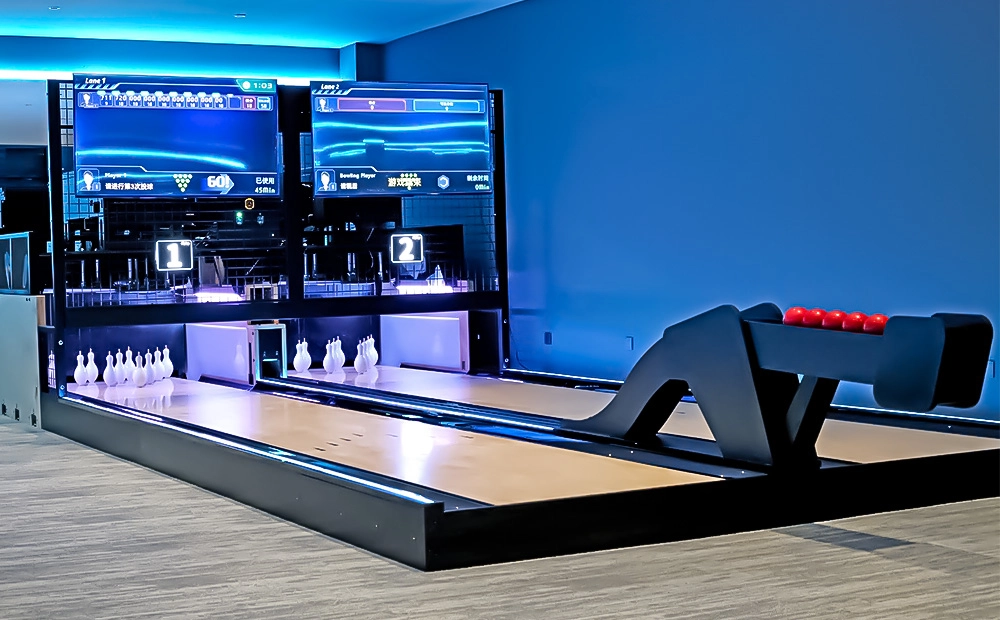
Flying Smart Duckpin Bowling
The innovative design of Flying Smart Duckpin Bowling (FSDB) makes it perfect for places like bars, billiard halls and game centers. It makes people want to come back more often and spend more money. FSDB is fun and competitive, so it will become a new focus for social activities.
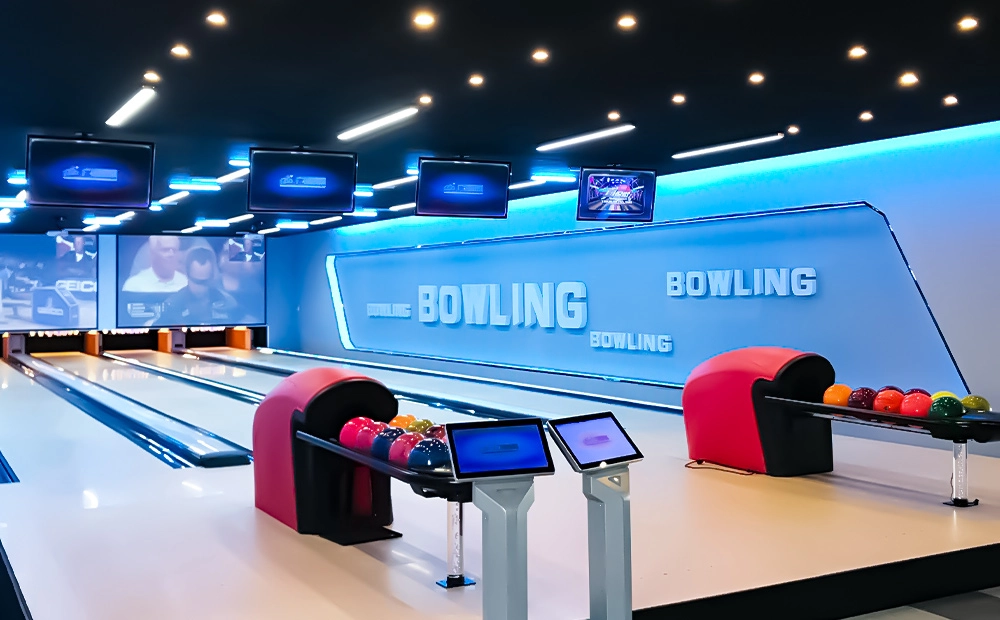
Flying Classic Standard Bowling
Flying Classic Standard Bowling (FCSB) employs the World Standard Competition Scoring System to deliver a more professional bowling experience, enabling bowlers to enjoy a professional-standard match at their convenience.
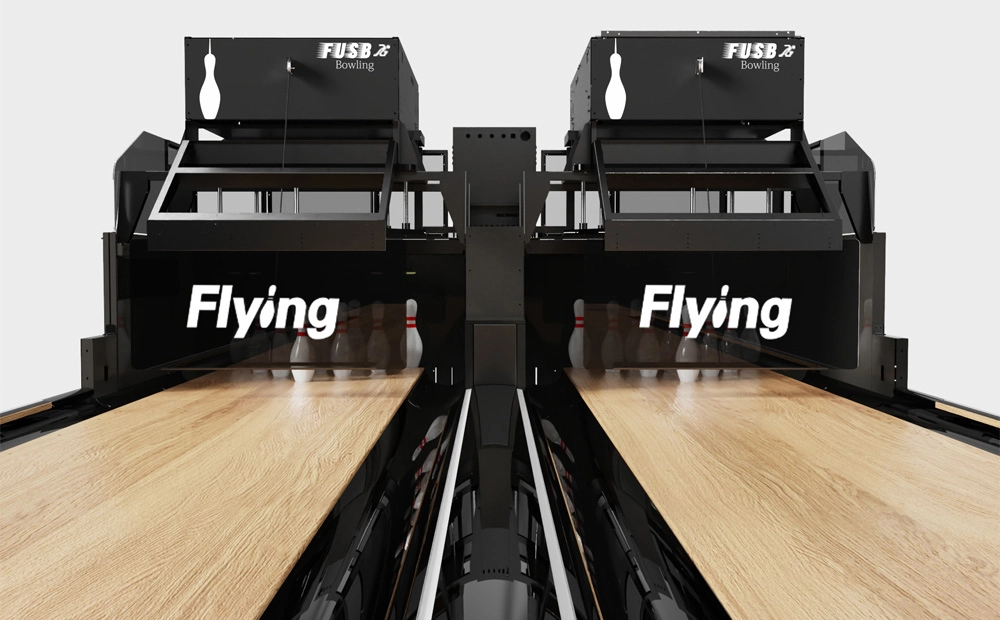
Flying Ultra Standard Bowling
Flying Ultra Standard Bowling (FUSB) Upgraded Version
The string pinsetter uses the latest technology. It offers a more enjoyable bowling experience thanks to its innovative designs and modern technology.

Facebook
YouTube
Linkedin
Twitter