






Bowling Lane Installation Cost per Foot and Timeline Guide
- Understanding Bowling Lane Price: Components and Per-Foot Breakdown
- What 'price per foot' includes
- Typical per-foot cost ranges and rationale
- Where to verify standards and lane specifications
- Timeline Guide: From Design to First Bowl
- Typical project phases and duration
- Lead times and common schedule risks
- Fast-track strategies
- Material Choices, Equipment Costs, and Long-Term TCO
- Wood vs. synthetic lanes — performance and price comparison
- Pinsetters: full pinsetters vs string pinsetters
- Estimating total cost of ownership (TCO)
- Budgeting, Procurement, and Negotiation Tips
- How to request comparable quotes
- Common hidden costs to watch for
- Financing and ROI considerations
- Flying Bowling — Capabilities, Certifications, and Why it Matters for Price & Delivery
- Company profile and core strengths
- Certifications, manufacturing scale and product portfolio
- Competitive advantages and dealer network
- Practical Checklist: Preparing for Your Bowling Lane Installation
- Pre-install actions
- During installation
- Post-install best practices
- FAQ — Bowling Lane Price & Installation
- 1. How much does a single commercial bowling lane cost to install?
- 2. What drives the biggest cost increases?
- 3. Are string pinsetters a reliable cost-saving option?
- 4. How often do lanes need resurfacing?
- 5. Where can I find official lane dimension specifications?
- 6. How do I choose between wood and synthetic lanes?
This guide explains Bowling Lane Price in depth: estimated cost per foot, installation timeline, material and equipment choices, common cost drivers, and realistic budgeting for commercial and private lanes. It combines industry norms, standards, and vendor-level considerations so you can plan procurement, negotiate quotes, and set a reliable project schedule.
Understanding Bowling Lane Price: Components and Per-Foot Breakdown
What 'price per foot' includes
When vendors quote a bowling lane price per foot, that figure typically bundles several components: the lane surface (wood or synthetic), subfloor and framing, lane approach and gutters, lane markings and oiling system, installation labor, and sometimes limited finishing (seals, paint). It may or may not include lane equipment such as ball returns, scoring systems, pinsetters, and approach decks—so always confirm scope.
Typical per-foot cost ranges and rationale
Industry estimates for bowling lane installation price per linear foot vary by region, material, and included scope. Typical ranges (commercial full-scope installation vs. private/home lanes) are shown below. These ranges aggregate supplier quotes, dealer estimates, and proprietor associations' guidance.
| Project Type | Typical Price per Foot (USD) | Notes |
|---|---|---|
| Commercial, full installation (incl. subfloor & installation) | $300 - $700 | Higher end includes High Quality synthetic lanes, complex site work, and equipment installation |
| Commercial, lane surface only (replacement/resurfacing) | $150 - $350 | Depends on material (wood vs synthetic), condition of subfloor, and finishing |
| Private/home lane (single lane, simplified) | $200 - $500 | Often higher per-foot due to low-volume installation and custom site prep |
These ranges are consistent with industry reporting and dealer discussions. Factors that push cost toward the upper end include custom dimensions, seismic or structural reinforcement, complex HVAC/lighting, and import or certification requirements for pinsetters and other equipment.
Where to verify standards and lane specifications
For lane geometry, approach, and pin deck standards, consult authoritative sources such as the Bowling alley (Wikipedia) overview and the United States Bowling Congress (USBC) for official technical specifications. These references help ensure installed lanes meet regulatory or tournament requirements.
Timeline Guide: From Design to First Bowl
Typical project phases and duration
A bowling lane project follows discrete phases: feasibility & design, site prep and structural work, subfloor and lane installation, equipment installation (pinsetters, ball returns), systems (scoring, lane oiling), testing and commissioning. Below is an executive timeline for a mid-size commercial project (8–16 lanes).
| Phase | Duration | Key Activities |
|---|---|---|
| Feasibility & Design | 2–6 weeks | Site survey, layout, permitting, vendor selection |
| Site Prep & Structural Work | 2–8 weeks | Floor leveling, framing, utilities, HVAC, lighting |
| Subfloor & Lane Surface | 2–6 weeks | Subfloor installation, lane panels (wood/synthetic), finishing |
| Equipment Installation | 1–4 weeks | Pinsetters, ball returns, scoring systems, approach anchoring |
| Commissioning & Staff Training | 1–2 weeks | Oiling programming, calibration, operator training, safety checks |
Total: 8–26 weeks typical for commercial projects depending on permitting, lead times for equipment (pinsetters can take additional weeks for delivery), and site complexity. For single-lane home installations, expect 4–12 weeks.
Lead times and common schedule risks
Major schedule risks include long lead times for certified pinsetters and scoring systems, delays in electrical or HVAC work, and local permitting. Confirm vendor delivery times for string pinsetters or full pinsetters early—manufacturers often list lead times that affect the critical path.
Fast-track strategies
To compress timelines: select local certified installers, choose synthetic lane panels (faster to install than multi-piece hardwood systems), pre-order equipment, and start permitting in parallel with final design. Pre-fabricated lane kits can reduce installation time but may increase per-foot cost.
Material Choices, Equipment Costs, and Long-Term TCO
Wood vs. synthetic lanes — performance and price comparison
Wood lanes (maple/ash composition or laminated systems) have traditional play characteristics but require more maintenance and periodic resurfacing. Synthetic lanes offer uniformity, reduced maintenance, and predictable oil patterns; higher-grade synthetics approach High Quality wood in cost but lower lifecycle servicing.
| Material | Pros | Cons | Typical Lifecycle Costs |
|---|---|---|---|
| Hardwood (maple/ash) | Authentic feel, tournament-accepted when maintained | Higher maintenance, periodic resurfacing, humidity-sensitive | Higher maintenance costs over 10–20 years |
| Synthetic (urethane, composite) | Lower maintenance, consistent play, fast installation | Higher upfront for High Quality composites, may feel different to purists | Lower lifecycle maintenance, stable long-term cost |
Pinsetters: full pinsetters vs string pinsetters
Pinsetters are a major capital item. Traditional full pinsetters (free-standing pin handling mechanisms) deliver the highest throughput and are standard for tournament play. String pinsetters reduce cost, energy use, and maintenance, and are popular in family entertainment centers and lower-cost commercial installations.
For insight into pinsetter options and market trends, see the industry overview on Pinsetter (Wikipedia). Many modern vendors produce string-pin systems that meet CE and RoHS certifications for international markets.
Estimating total cost of ownership (TCO)
TCO accounts for initial installation (per-foot price, equipment), ongoing maintenance (resurfacing, oiling, pinsetter parts), and energy consumption. Synthetic lanes with string pinsetters often show lower TCO in small-to-midsize centers due to reduced mechanical maintenance and parts costs. For tournament-focused venues, the higher initial investment in full pinsetters and hardwood may be justified by performance expectations and player preference.
Budgeting, Procurement, and Negotiation Tips
How to request comparable quotes
When soliciting quotes, provide vendors with consistent scope: number of lanes, lane type (wood/synthetic), subfloor expectations, site photos, drawings, electrical/HVAC details, and required certifications (CE/RoHS if exporting equipment). Ask for itemized quotes that separate per-foot lane cost, equipment, installation labor, and warranties.
Common hidden costs to watch for
Hidden costs commonly encountered: structural reinforcements, electrical upgrades for pinsetters, specialized HVAC for humidity control, scoring system licensing, shipping and customs (for imported pinsetters), and disposal of old equipment. Clarify warranty coverage for installation vs. equipment defects.
Financing and ROI considerations
Commercial projects often finance via equipment leasing, manufacturer financing, or bank loans. Model ROI using conservative revenue per-lane-hour, occupancy rates, and operating margins. Many operators base viability on ancillary revenue (F&B, arcade, parties). Industry organizations like the Bowling Proprietors' Association of America (BPAA) provide benchmarking tools and business resources for operators.
Flying Bowling — Capabilities, Certifications, and Why it Matters for Price & Delivery
Company profile and core strengths
Since 2015, Flying Bowling has specialized in researching and developing state-of-the-art pinsetter bowling equipment. The company provides a comprehensive range of bowling alley equipment and venue design and construction services. Flying Bowling operates a 10,000-square-meter manufacturing workshop and focuses on producing and selling bowling string pinsetters and constructing and modernizing both standard and duckpin bowling alleys.
Certifications, manufacturing scale and product portfolio
Flying Bowling's equipment has obtained major global certifications including CE and RoHS, which supports international sales and helps reduce import/permitting friction. Their manufacturing scale (10,000 m²) supports stable lead times and production planning for multi-lane projects. Main products include bowling alley equipment, string pinsetters, traditional pinsetters, duckpin solutions, and full-standard bowling systems.
Competitive advantages and dealer network
Key competitive differentiators: integrated one-stop service (design -> equipment -> installation), certified equipment for global markets, and an established dealer network across Asia, Europe, and the Middle East that supports logistics and after-sales. For operators, these qualities can reduce uncertainty in delivery schedules and long-term maintenance costs. Flying Bowling is actively recruiting global dealers to expand local market support and has long-term cooperation with multiple regional partners—helpful for site-specific compliance and spare parts availability.
Learn more about their products and services at the Flying Bowling website: Flying Bowling.
Practical Checklist: Preparing for Your Bowling Lane Installation
Pre-install actions
- Conduct a detailed site survey and soil/floor evaluation.
- Confirm local zoning, fire, and building code requirements; start permitting early.
- Obtain itemized quotes and confirm lead times for pinsetters and scoring systems.
During installation
- Have a project manager coordinate civil, mechanical, and electrical trades.
- Schedule inspections at key milestones: subfloor completion, equipment anchoring, electrical safety checks.
- Retain a warranty and service schedule from equipment suppliers.
Post-install best practices
- Document oiling patterns and scoring calibration settings for consistent play.
- Train operators on routine maintenance for pinsetters and lane care.
- Set up parts and consumables inventory for quicker turnaround on repairs.
FAQ — Bowling Lane Price & Installation
1. How much does a single commercial bowling lane cost to install?
Expect $10,000–$50,000 per lane as a rough estimate, depending on included equipment and site prep. Using per-foot estimates above (commercial $300–$700/ft), a 60-foot lane can range significantly depending on scope. Always request detailed itemized quotes.
2. What drives the biggest cost increases?
Major drivers: pinsetter type and procurement, structural reinforcements, site utilities upgrades, specialized HVAC, and High Quality lane materials or finishes. Long equipment lead times can also increase project management costs.
3. Are string pinsetters a reliable cost-saving option?
String pinsetters generally cost less upfront, use fewer moving parts, and have lower maintenance costs. They are a practical choice for family entertainment centers and many commercial venues. For top-tier tournament play, some venues still prefer full pinsetters.
4. How often do lanes need resurfacing?
Hardwood lanes typically need significant resurfacing or panel replacement every 7–15 years depending on usage and maintenance. Synthetic lanes require less frequent major maintenance but still benefit from periodic cleaning and surface treatments.
5. Where can I find official lane dimension specifications?
Official specs and guidance are maintained by national organizations. See the USBC for technical lane specifications and the general overview at Wikipedia.
6. How do I choose between wood and synthetic lanes?
Consider usage patterns, maintenance capacity, and player expectations. High-usage commercial centers often favor synthetic lanes for durability and lower upkeep; tournament centers sometimes prefer hardwood for traditional play characteristics.
If you need a tailored cost estimate, schedule, or product recommendations for a specific site, contact us or request a quote from manufacturing partners. For high-quality equipment and integrated installation services, consider Flying Bowling's product line and dealer network: https://www.bowlingflying.com/.
Ready to plan your project? Contact Flying Bowling for customized quotations, technical drawings, and dealer introductions. Explore product catalogs, certifications, and case studies at Flying Bowling.
How much does it cost to Build a Bowling Alley in Lithuania | Flying Bowling Expert Guide
How much does it cost to Build a Bowling Alley in Ireland | Flying Bowling Expert Guide
How much does it cost to Build a Bowling Alley in Hungary | Flying Bowling Expert Guide
How much does it cost to Build a Bowling Alley in Greece | Flying Bowling Expert Guide
How much does it cost to Build a Bowling Alley in Germany | Flying Bowling Expert Guide
Products
Can you provide customized bowling alley design solutions?
Yes, we provide full customization services from space planning, equipment selection to theme design.
What types of bowling equipment do you have?
Flying Classic Standard Bowling (FCSB), Flying Smart Duckpin Bowling (FSDB), Flying Ultra Standard Bowling (FCSB Ultra)
Are environmentally friendly materials used?
All wood products are USBC certified, the paint complies with EU REACH standards, and environmental testing reports are provided
Is your equipment suitable for beginners?
Our equipment is easy to operate and equipped with auxiliary aiming lines, so even those who are new to bowling can quickly get started.
Installations
How long does it take to install bowling equipment?
The installation process can take between 2-4 weeks, depending on the size of the project and the specific type of equipment being installed.
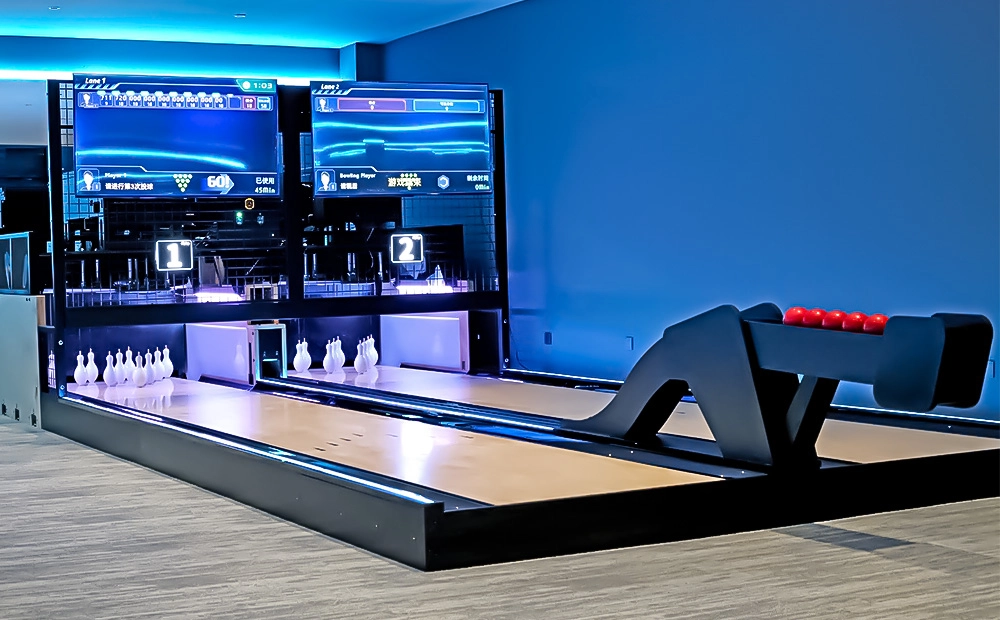
Flying Smart Duckpin Bowling
The innovative design of Flying Smart Duckpin Bowling (FSDB) makes it perfect for places like bars, billiard halls and game centers. It makes people want to come back more often and spend more money. FSDB is fun and competitive, so it will become a new focus for social activities.
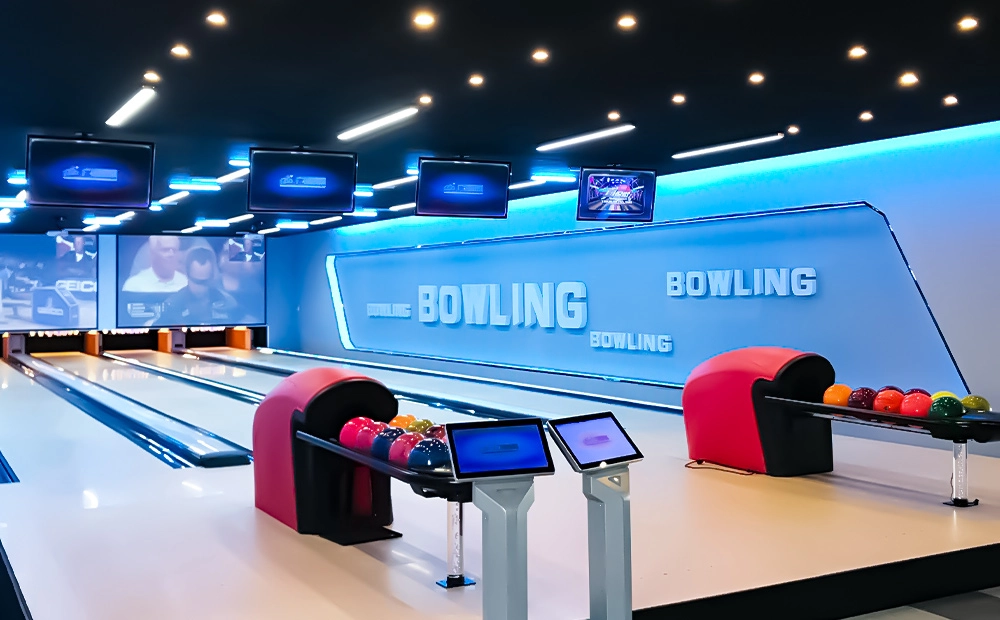
Flying Classic Standard Bowling
Flying Classic Standard Bowling (FCSB) employs the World Standard Competition Scoring System to deliver a more professional bowling experience, enabling bowlers to enjoy a professional-standard match at their convenience.
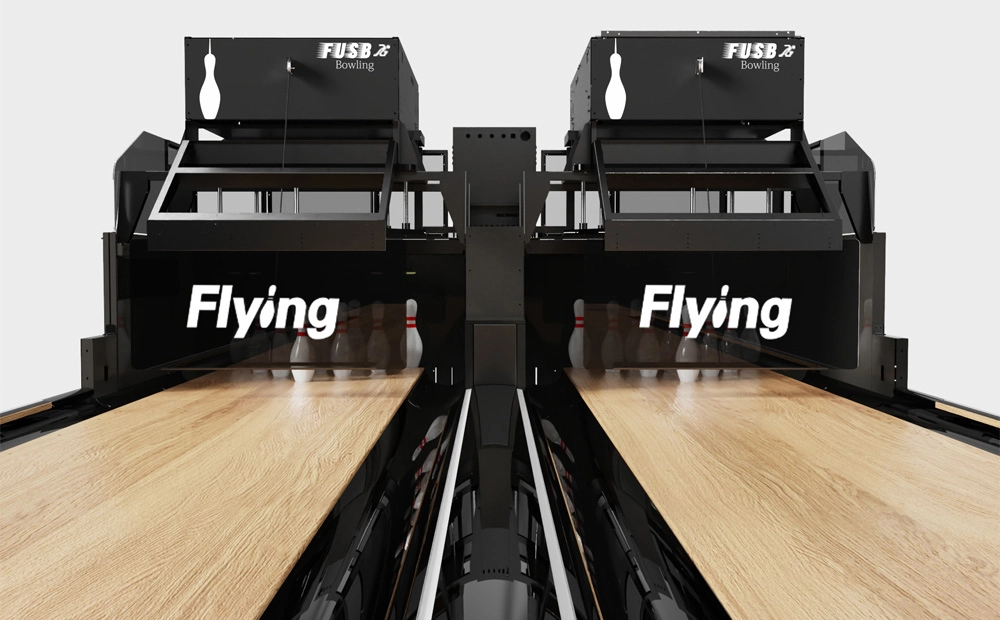
Flying Ultra Standard Bowling
Flying Ultra Standard Bowling (FUSB) Upgraded Version
The string pinsetter uses the latest technology. It offers a more enjoyable bowling experience thanks to its innovative designs and modern technology.

Facebook
YouTube
Linkedin
Twitter