






How Much Does a Bowling Lane Cost? Complete Price Breakdown
- Understanding the variables behind bowling lane pricing
- Equipment and material cost breakdown (per lane)
- Lane surface: synthetic vs. maple (price and lifecycle)
- Pinsetters and mechanical systems
- Scoring systems, monitors and electronics
- Installation, construction and indirect costs
- Labor, installation and site preparation
- Building, permitting, and soft costs (per-lane share)
- Specialized equipment: oiling machines, lane maintenance & accessories
- Operating and lifecycle costs
- Annual maintenance and consumables
- Energy, staffing and insurance
- Price comparison table: component ranges per lane
- Sample total budgets: 12-lane center scenarios
- Decision factors and ways to optimize bowling lane price
- 1) Choose the right surface and supplier mix
- 2) Evaluate new vs. refurbished equipment
- 3) Plan for energy and operational efficiency
- 4) Negotiate bundled packages and long-term service
- Checklist: questions to ask suppliers before quoting
- References
- Frequently Asked Questions (FAQ)
- 1. What is the average cost per lane to build a new bowling center?
- 2. Are synthetic lanes more expensive than wood?
- 3. Can I install refurbished pinsetters to save money?
- 4. How often do lanes need resurfacing?
- 5. What ongoing costs should I budget annually per lane?
- 6. How do I get accurate, project-specific pricing?
Understanding the variables behind bowling lane pricing
Bowling lane price is not a single fixed figure — it’s the sum of multiple components: lane surface (synthetic or wood), pinsetters, scoring and display systems, ball returns, approach and gutter systems, oiling/conditioning equipment, installation labor, and the share of building construction and permitting costs. Regional labor, shipping, local building codes, and the chosen brand (Brunswick, QubicaAMF, etc.) also materially affect total cost. This article gives a complete, verifiable price breakdown, example totals for common project sizes, and purchasing & lifecycle guidance informed by industry manufacturers and trade groups.
Equipment and material cost breakdown (per lane)
Lane surface: synthetic vs. maple (price and lifecycle)
Lane surface is the visual and functional core of a lane. Modern synthetic lanes are standard in most commercial centers for durability and consistency. Maple (wood) lanes are less common for new installations due to maintenance and availability.
- Typical cost (lane surface materials + local finishing): $8,000–$20,000 per lane.
- Lifespan: synthetic lanes typically 20+ years with periodic resurfacing; wood lanes require more frequent maintenance.
- Trade-offs: synthetic = lower maintenance and longer life; wood = traditional feel but higher long-term maintenance and replacement cost.
Sources: manufacturer product pages and technical notes: QubicaAMF, Brunswick Bowling.
Pinsetters and mechanical systems
Pinspotters/pinsetters are among the most expensive single items. Modern automatic pinsetters from major suppliers are engineered for high throughput and reliability.
- Typical cost: $20,000–$40,000 per lane (new automatic pinspotter) depending on model and options.
- Consider refurbished units to lower upfront cost; refurbished pinsetters are often available but may incur higher servicing costs later.
Sources: manufacturer product catalogs: QubicaAMF pinspotters, Brunswick.
Scoring systems, monitors and electronics
Digital scoring, video displays, and sound systems are now standard in modern centers. Pricing scales with display size, software features (league management, cashless integrations), and touchscreen or kiosk options.
- Typical cost: $2,500–$8,000 per lane (average includes score terminals, overhead monitors, and licensing).
- Many systems are sold per-pair or per-module — confirm pricing model with supplier.
Sources: vendor pages and industry overviews: QubicaAMF.
Installation, construction and indirect costs
Labor, installation and site preparation
Installation includes subfloor preparation, leveling, lane assembly, pit work, plumbing/electrical for pinsetters, and calibration. Complexity rises if the building requires reinforced foundations or changes to existing structure.
- Typical installation & labor: $5,000–$20,000 per lane (depends heavily on local labor rates and site complexity).
- Site improvements (floor loading upgrades, HVAC, dedicated electrical panels) can add substantially.
Sources: construction considerations from industry organizations and manufacturers: Bowling Proprietors' Association of America (BPAA), manufacturers.
Building, permitting, and soft costs (per-lane share)
The building envelope, parking, fire protection systems, lobby, restrooms, and concession/arcade spaces are shared among lanes and therefore typically allocated to each lane when estimating total project cost.
- Typical range allocated per lane (new build): $50,000–$200,000 per lane depending on site, scope (family entertainment center vs. league-focused alley), and local construction costs.
- Soft costs: architectural fees, engineering, permits, insurance, and contingency typically add 10–25% on top of hard costs.
References: industry guidance on center development and cost drivers: BPAA resources, commercial construction cost references.
Specialized equipment: oiling machines, lane maintenance & accessories
Lane conditioning and maintenance are critical to lane life and playability. Commercial centers typically invest in automatic oil/conditioner machines, pinsetter parts inventory, and maintenance tools.
- Oiling/conditioning machines: $5,000–$15,000 per unit; a single high-end unit may serve multiple lanes but planning often budgets a per-lane equivalent.
- Initial spare parts, oil supply, lane cleaning equipment and training: usually a few hundred to a few thousand dollars per lane as startup inventory.
- Supplier example: Kegel lane machines & conditioning systems.
Operating and lifecycle costs
Annual maintenance and consumables
Ongoing costs include lane oil, lane resurfacing/repair (when needed), pinsetter maintenance, utilities (HVAC and high electrical loads), and labor for maintenance staff.
- Typical annual maintenance (per lane): $1,500–$6,000 depending on usage intensity (league vs. party-heavy entertainment centers).
- Lane replacement/resurfacing cycle: expect partial resurfacing or major repairs at intervals; budgeting for replacement in long-term capital plans is essential.
Sources: operational guidance from manufacturers and industry groups: QubicaAMF, Brunswick, BPAA.
Energy, staffing and insurance
Insurance, higher energy costs for HVAC and pinsetter motors, and staffing (lane attendants, front desk, kitchen/arcade staff) are ongoing operating expenses and directly affect the center’s break-even and ROI timeline.
Price comparison table: component ranges per lane
| Component | Low estimate (per lane) | High estimate (per lane) | Notes |
|---|---|---|---|
| Lane surface (synthetic/installation) | $8,000 | $20,000 | Material, base plates, finishing |
| Pinsetter / pinspotter | $20,000 | $40,000 | New automatic units; refurbished lower |
| Scoring & displays | $2,500 | $8,000 | Per-lane equivalent; vendor options vary |
| Ball return / pit / gutters | $2,000 | $5,000 | Includes pitwork and returns |
| Oiling / maintenance equipment (per-lane share) | $500 | $5,000 | Single machines may serve several lanes |
| Installation & labor | $5,000 | $20,000 | Site-dependent complexity |
| Building & soft costs (per-lane share) | $50,000 | $200,000 | Major variable — land, structure, finishing |
Notes: ranges are industry-based estimates; refer to manufacturer product pages and industry groups for product-specific pricing and quotes (links in References).
Sample total budgets: 12-lane center scenarios
Below are three example scenarios to illustrate how component ranges translate to whole-project budgets. These figures are illustrative; obtain quotes for precise planning.
| Scenario | Per-lane total | 12-lane center total | Description |
|---|---|---|---|
| Economy | $75,000 | $900,000 | Used/refurbished pinsetters, basic scoring, modest building finish. |
| Mid-range | $135,000 | $1,620,000 | New equipment from major suppliers, standard finishes, modern scoring. |
| High Quality | $250,000 | $3,000,000 | High-end finishes, High Quality displays, expanded FEC (arcade/food) footprint. |
These scenarios include equipment, installation, and an allocated share of building and soft costs. Larger entertainment centers with additional revenue streams (bowling + arcade + food & beverage) will allocate more budget to shared spaces but can improve per-lane economics through added revenue.
Decision factors and ways to optimize bowling lane price
1) Choose the right surface and supplier mix
Synthetic lanes with a reliable manufacturer warranty reduce long-term maintenance and total cost of ownership (TCO). Compare warranties, service networks, and replacement schedules. Major OEMs such as QubicaAMF and Brunswick have global parts networks that reduce downtime and maintenance cost.
2) Evaluate new vs. refurbished equipment
Refurbished pinsetters and scoring hardware can reduce startup CAPEX by 20–40% but require careful inspection and an allocated parts/servicing budget.
3) Plan for energy and operational efficiency
Invest in efficient HVAC, LED lighting and modern, efficient pinspotters; these reduce ongoing operating expenses and can shorten payback periods.
4) Negotiate bundled packages and long-term service
Suppliers often offer discounts on multi-lane purchases and long-term service contracts. Negotiate warranties, parts inventory, and training as part of the purchase package to control operating risk.
Checklist: questions to ask suppliers before quoting
- What is included in the quoted price (installation, calibration, shipping)?
- What is the expected delivery and installation timeline?
- What warranty and service response times are offered? Are service contracts optional or recommended?
- Are spare parts and consumables available locally? What are typical annual parts costs?
- Can you supply references for recent comparable installations?
References
- QubicaAMF — company and product resources (pinspotters, scoring systems): https://www.qubicaamf.com
- Brunswick Bowling — product and technical information: https://brunswickbowling.com
- Kegel — lane maintenance and oiling machines: https://kegel.net
- Bowling Proprietors' Association of America (BPAA) — industry resources and operator guidance: https://www.bpaa.com
- USBC (United States Bowling Congress) — lane specifications and standards: https://www.bowl.com
Frequently Asked Questions (FAQ)
1. What is the average cost per lane to build a new bowling center?
Average per-lane cost depends on scope: equipment-only projects commonly range from $30,000–$90,000 per lane, while full new-build projects including construction and soft costs commonly range $75,000–$300,000 per lane. See sample scenarios above for practical totals.
2. Are synthetic lanes more expensive than wood?
Upfront costs for high-quality synthetic lanes can be equal to or slightly higher than wood, but synthetic lanes typically deliver lower maintenance and longer service life, reducing total cost of ownership.
3. Can I install refurbished pinsetters to save money?
Yes. Refurbished pinsetters lower CAPEX but may increase short-term maintenance needs. Always inspect refurbishment quality and secure a parts/service agreement.
4. How often do lanes need resurfacing?
Resurfacing intervals vary with usage and surface type. Synthetic lanes may need periodic maintenance or partial repairs after many years; wood lanes generally require more frequent refinishing. Plan capital reserves for mid- to long-term resurfacing.
5. What ongoing costs should I budget annually per lane?
Budget roughly $1,500–$6,000 per lane per year for maintenance, consumables, and parts depending on center usage intensity, plus energy, staffing and insurance costs shared across the facility.
6. How do I get accurate, project-specific pricing?
Request detailed, itemized quotes from at least two major manufacturers (e.g., QubicaAMF, Brunswick), include installation and service options, and have a contractor assess site-specific construction costs. Consider working with a consultant experienced in bowling center development.
If you’d like a professional quote or tailored project estimate for your location and business model, contact our team to schedule a free consultation and view product options. Explore equipment catalogs and request site assessment: Contact Sales or visit our product pages for detailed specs.
How much does it cost to Build a Bowling Alley in Lithuania | Flying Bowling Expert Guide
How much does it cost to Build a Bowling Alley in Ireland | Flying Bowling Expert Guide
How much does it cost to Build a Bowling Alley in Hungary | Flying Bowling Expert Guide
How much does it cost to Build a Bowling Alley in Greece | Flying Bowling Expert Guide
How much does it cost to Build a Bowling Alley in Germany | Flying Bowling Expert Guide
Products
What material is used for the bowling lane? How long is its lifespan?
It is made of high-strength maple wood + synthetic composite material, and has been treated with anti-corrosion. Under normal use, its lifespan exceeds 15 years.
Does your bowling equipment meet international standards?
It meets international standards. The equipment strictly follows the US USBC (United States Bowling Congress) international standard certification, which is one of the highest standards recognized by the global bowling industry. USBC certification ensures that our equipment has reached the international top level in terms of safety, durability, performance and user experience.
Service
What are the free cases during the warranty period, and what are the cases that require additional charges?
Covering failures caused by material/workmanship defects, providing free labor and parts repairs; non-quality damage will be charged at cost, and a detailed quotation will be provided for confirmation before repair.
Technology
How can I get the latest technology upgrades?
Our customers can get software updates for free and hardware upgrades at cost price.
Customer care
My room is only about 50 or 60 feet long. How short is too short" for bowling lanes?
That depends on what each person likes. It's like asking how low we can put a basketball goal so that it's still fun. If your bowlers are mostly kids or people who haven't bowled much, they might not mind extremely short lanes. But serious league and tournament bowlers won't like a lane that isn't the normal size.
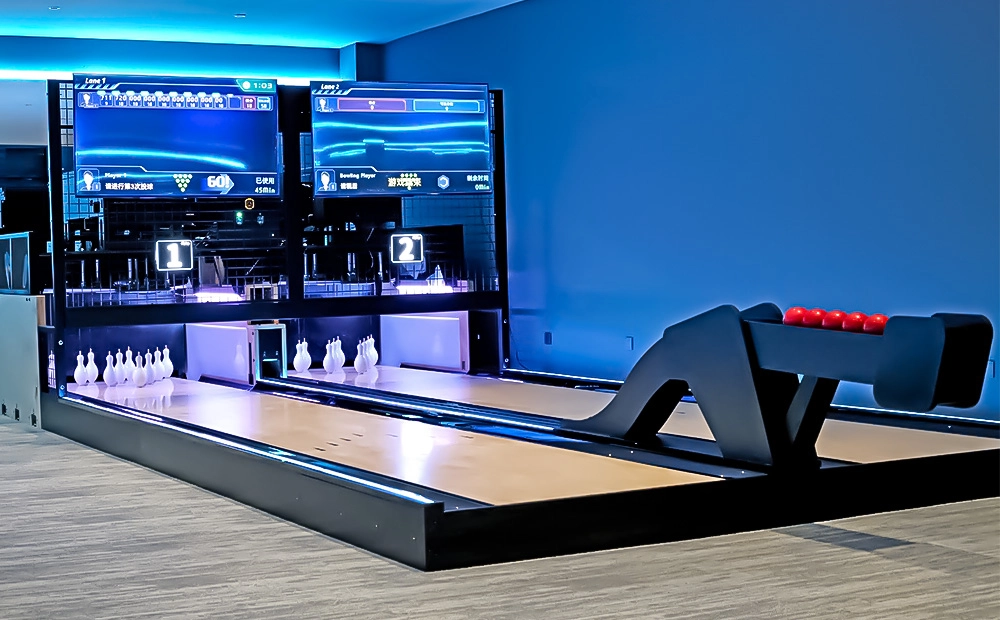
Flying Smart Duckpin Bowling
The innovative design of Flying Smart Duckpin Bowling (FSDB) makes it perfect for places like bars, billiard halls and game centers. It makes people want to come back more often and spend more money. FSDB is fun and competitive, so it will become a new focus for social activities.
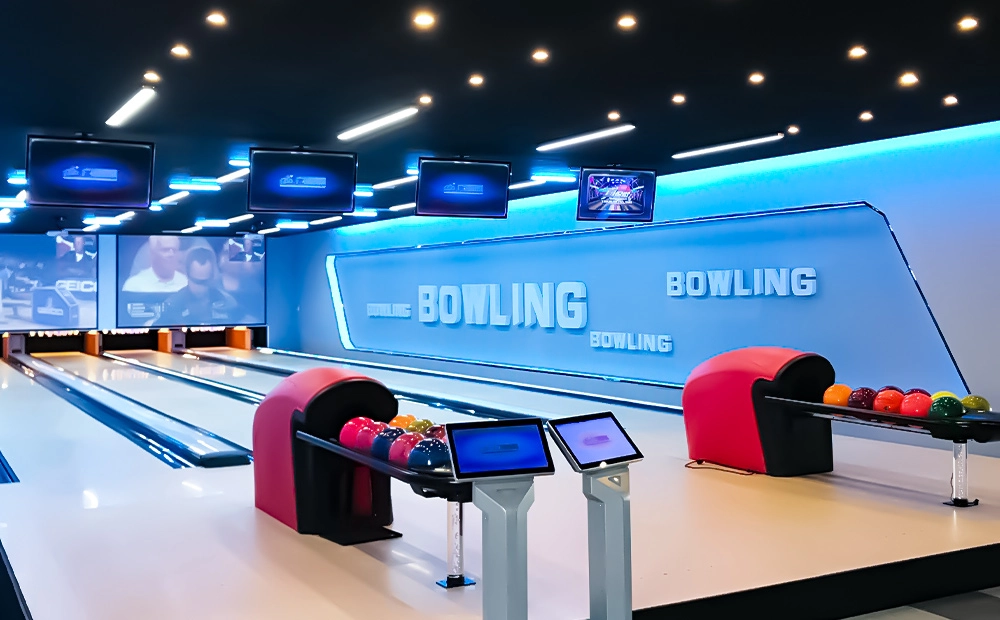
Flying Classic Standard Bowling
Flying Classic Standard Bowling (FCSB) employs the World Standard Competition Scoring System to deliver a more professional bowling experience, enabling bowlers to enjoy a professional-standard match at their convenience.
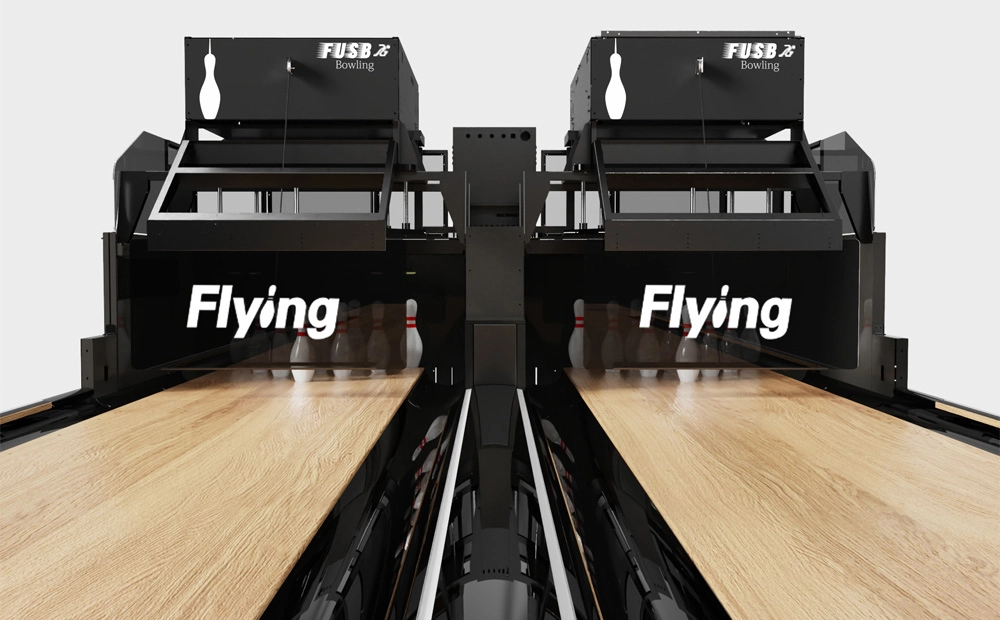
Flying Ultra Standard Bowling
Flying Ultra Standard Bowling (FUSB) Upgraded Version
The string pinsetter uses the latest technology. It offers a more enjoyable bowling experience thanks to its innovative designs and modern technology.

Facebook
YouTube
Linkedin
Twitter